
Why Wieliczka Salt Mine Belongs on Every Traveller's Bucket List
The Wieliczka Salt Mine is not "just another tourist attraction." This is over 700 years of salt-mining history carved into the earth — underground lakes shimmering in emerald tones, chapels hewn entirely from salt rock, and corridors stretching for more than 287 kilometres. It's been a UNESCO World Heritage Site since 1978, and that distinction is very much deserved.
The mine welcomes over 1.2 million visitors every year from around the globe. At its deepest, it plunges 327 metres below the surface, and the Tourist Route alone passes through three levels of the mine, revealing vast chambers, intricate salt sculptures, and glassy underground lakes. This is one of those rare places that leaves an impression regardless of whether you're 8 or 80 years old — and I say that after visiting dozens of UNESCO sites across Europe.
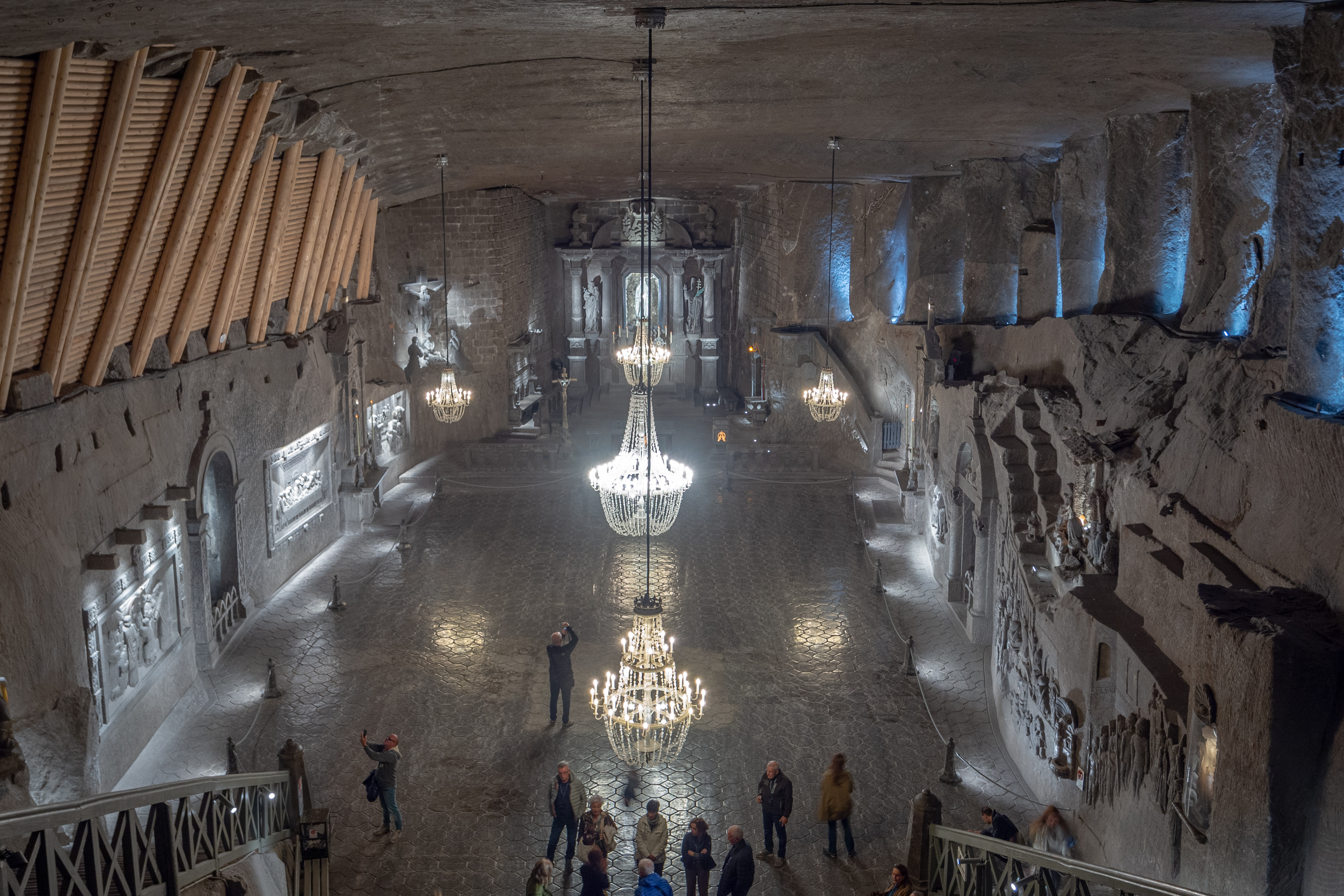
St. Kinga's Chapel — an underground cathedral adorned with chandeliers made from hand-carved salt crystals.
How to Buy Wieliczka Salt Mine Tickets Online
Buying tickets online is, without question, the smartest move you can make — and I say this after watching dozens of frustrated tourists miss their window in peak season. Queues at the on-site ticket office can stretch for over an hour during July and August. Booking online means you choose a specific entry time and simply show up when scheduled.
Step by Step: Booking Your Tickets
- Choose your date and time slot — the earlier you book, the more options you'll have. In summer, it's wise to secure tickets 2–3 weeks ahead.
- Select your ticket type — standard, reduced (children, students, seniors) or family ticket.
- Complete payment online — you'll receive a confirmation by email instantly.
- Arrive 15 minutes before your scheduled time — the meeting point is at the main entrance on ul. Daniłowicza 10.
Tour Routes — Which One Should You Choose?
The Wieliczka Salt Mine offers several tour options, with two main routes: the Tourist Route and the Miners' Route. Each delivers a genuinely different experience, and the right choice depends on what you're looking for.
Tourist Route
This is the classic choice and by far the most popular option. The route covers 3.5 km of underground corridors across three levels of the mine. Highlights include:
- St. Kinga's Chapel — an underground cathedral with chandeliers carved entirely from salt crystals
- Chambers featuring salt sculptures depicting legends and historical scenes
- Underground lakes with their extraordinary emerald-green water
- Historic mining machinery and hoist mechanisms
The tour takes approximately 2–3 hours. You descend via 380 steps (about 64 metres below ground). The return journey to the surface is by mine elevator — one of the fastest of its kind, carrying 36 passengers up in roughly 30 seconds.
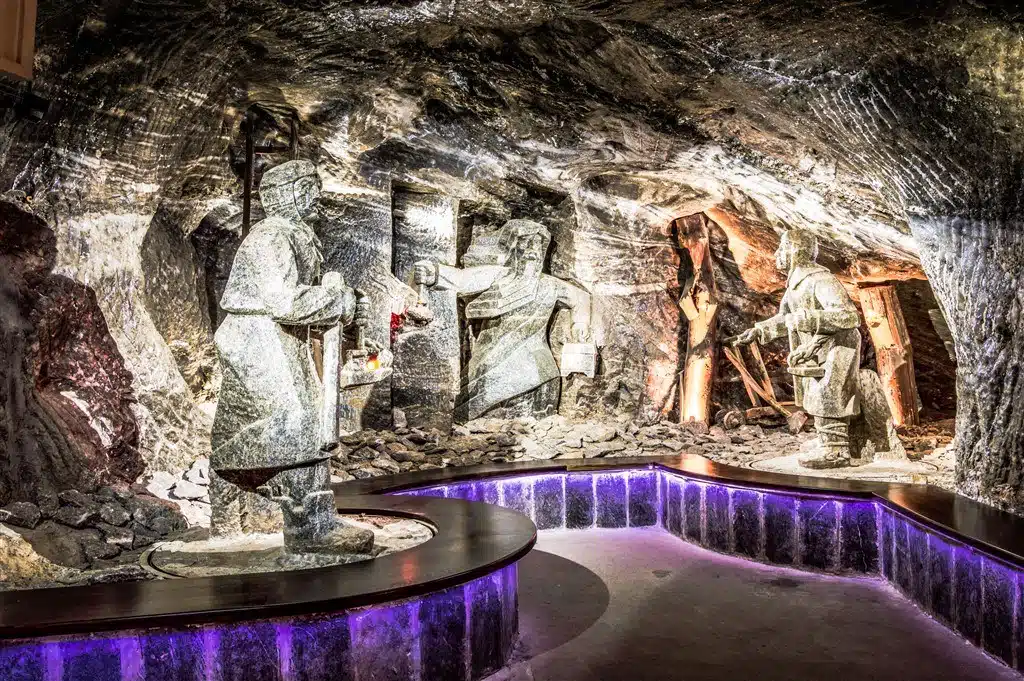
Salt sculptures in one of the mine's chambers — depicting scenes from the lives of historical miners.
Miners' Route
For those who want to feel like a genuine miner. On the Miners' Route, you're kitted out with a hard hat, headlamp, and overalls before exploring the corridors under a guide's supervision. The route runs about 3 hours and is considerably more hands-on — you'll chisel salt, squeeze through narrow passages, and experience the mine from the inside out.
| Feature | Tourist Route | Miners' Route |
|---|---|---|
| Duration | 2–3 hrs | approx. 3 hrs |
| Route Length | 3.5 km | approx. 2 km |
| St. Kinga's Chapel | ✓ | ✗ |
| Interactive Elements | ✗ | ✓ |
| Age Requirements | No restriction* | 10 years minimum |
| Pushchair Accessible | ✗ | ✗ |
* Children under 4 enter free. Data based on information from the official mine website.
How to Save Money on Your Tickets
Wieliczka Salt Mine tickets aren't cheap, but there are several tried-and-tested ways to reduce the cost of your visit:
- Reduced tickets — available for children (4–16 years), students with a valid ID card, and seniors. Discounts are typically around 15–20%.
- Family ticket — if you're travelling with children, look into the family ticket option (2 adults + up to 3 children). More about family tickets →
- Early booking — some platforms offer better rates when you book well in advance.
- Discount cards — check whether your city pass (e.g. Kraków Card) includes discounts or free entry to the mine.
- Combo tickets — packages combining transport from Krakow with mine entry can work out cheaper than arranging both separately.
Getting to Wieliczka Salt Mine from Krakow
Wieliczka is just 15 km south-east of Krakow city centre. You have several options for getting there, each with its own trade-offs in terms of cost, convenience, and time.
Train (Recommended)
From Kraków Główny station, trains run regularly to Wieliczka Rynek-Kopalnia station in about 25 minutes. Tickets cost just a few zloty, and from the station, the mine entrance is a pleasant 5-minute walk. This is my personal go-to method — cheap, fast, and stress-free.
Bus 304
City bus line 304 runs from central Krakow to Wieliczka. Journey time is approximately 30–40 minutes depending on traffic. A good budget option, though the train is usually quicker.
Car
There's a car park at the mine, but in peak season it fills up fast. If you're driving, factor in extra time for parking. Set your sat-nav for ul. Daniłowicza 10, Wieliczka.
Organised Transfer
Many tour operators offer packages combining hotel pickup in Krakow with mine entry tickets. This is an excellent option if you'd rather not think about logistics — particularly convenient for families with young children or those on a tighter schedule.
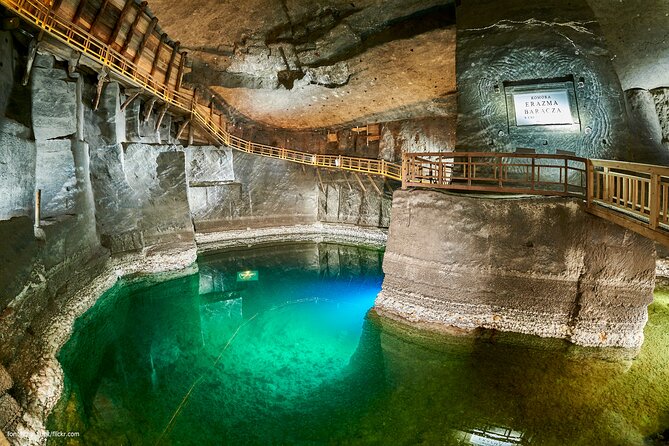
The Erazm Barącz Chamber with its underground lake — one of the most breathtaking spots along the Tourist Route.
Practical Tips Before You Visit
After years of experience covering European travel attractions, here are the tips that actually make a difference:
- Dress in layers — it's a constant 14°C (57°F) underground, no matter what the weather outside. A warm fleece or light jacket is non-negotiable, even in midsummer.
- Wear comfortable, flat shoes — you'll be descending 380 steps. The surface can be slippery from salt deposits. Leave the heels and flip-flops at the hotel.
- Be punctual — arrive at least 15 minutes before your booked entry time. Groups depart on schedule, and latecomers are not admitted.
- Photography — photography is permitted on the Tourist Route (no tripods, no flash). Different rules apply on the Miners' Route.
- Families with children — the mine is genuinely fascinating for kids, but the route requires physical effort. Pushchairs and prams cannot be taken underground.
- Claustrophobia — the main corridors are wide and well-lit, but some passages narrow considerably. Worth considering if you're prone to claustrophobia.
History of Wieliczka Salt Mine — A Brief Overview
Salt extraction in Wieliczka dates back to the Neolithic period, with the earliest written records from 1044. Commercial mining began in the 13th century and continued without interruption until 1996 — making Wieliczka one of the longest continuously operated mines in the world. That's remarkable by any measure.
In 1978, the mine became one of the first sites ever inscribed on the UNESCO World Heritage List. In 2010, the listing was extended to include the salt mine at Bochnia, forming the joint inscription "Royal Salt Mines in Wieliczka and Bochnia."
Over the centuries, the mine has welcomed some extraordinary guests: Nicolaus Copernicus, Johann Wolfgang Goethe, Frédéric Chopin, Dmitri Mendeleev, and even US President Bill Clinton. Pope John Paul II — then Karol Wojtyła — visited before his papacy.
The Legend of Saint Kinga
The mine is tied to the legend of Saint Kinga, a Hungarian princess who, before travelling to Poland to wed the Polish prince, dropped her engagement ring into a salt mine shaft in Máramaros, Hungary. When she arrived in Wieliczka, she asked the local miners to dig — and they found a lump of salt with her ring embedded inside. Kinga became the patron saint of salt miners in the Krakow region, and the chapel named in her honour remains the most spectacular chamber in the entire mine.
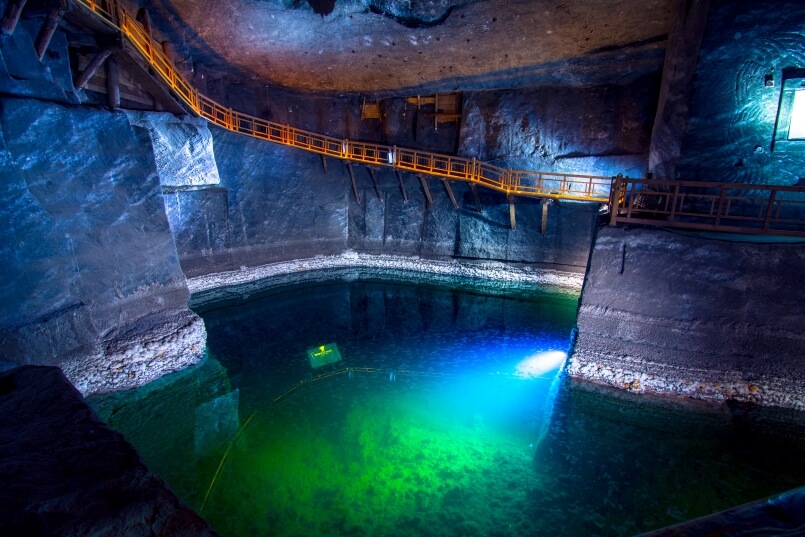
One of the underground brine lakes — the water takes on an intense, emerald hue thanks to the dissolved minerals.
What Makes Wieliczka's Salt So Special?
The salt at Wieliczka isn't the bright white, crystalline variety you'd find in a kitchen shaker. Natural rock salt here comes in shades of grey and resembles unpolished granite. Historical records identified three grades: green salt (mixed with clay), shaft salt (the purest grade), and sandy salt.
The sculptures throughout the mine — from mining scenes to a stunning recreation of Leonardo da Vinci's "The Last Supper" — are carved from this very same rock salt. The chandeliers in St. Kinga's Chapel are crafted from salt crystals that refract light in a way that genuinely has to be seen to be believed. Every time I've been, I've watched first-time visitors just stop and stare upwards in silence.
Frequently Asked Questions (FAQ)
Prices depend on the route and season. A standard adult ticket for the Tourist Route costs approximately 120 PLN, with reduced tickets from around 100 PLN. Check current rates at the official mine website or see our detailed ticket prices guide.
Absolutely. In summer (June–September), tickets can sell out several days in advance. Even outside peak season, weekends get crowded. Online booking guarantees your entry at the time you choose — no nasty surprises at the door.
Unfortunately, the standard Tourist Route requires descending 380 steps and is not wheelchair accessible. Visitors with reduced mobility should contact the mine directly to discuss available options.
No. All visits are conducted in groups with a licensed guide. This is a safety requirement — the corridor network spans over 287 km. Getting lost is not a theoretical concern.
The Tourist Route takes approximately 2–3 hours; the Miners' Route around 3 hours. Add time for the meeting point, queuing to board the lift, and any time you spend in the underground restaurant or souvenir shop.
A constant 14–16°C (57–61°F) throughout the year. Bring a warm jumper or light jacket — even if it's 30°C outside. That temperature drop is genuinely noticeable the moment you start descending.